
Interactive Event Entertainment for Conference & Networking Event Connection Points: Insights from DJ Graffiti
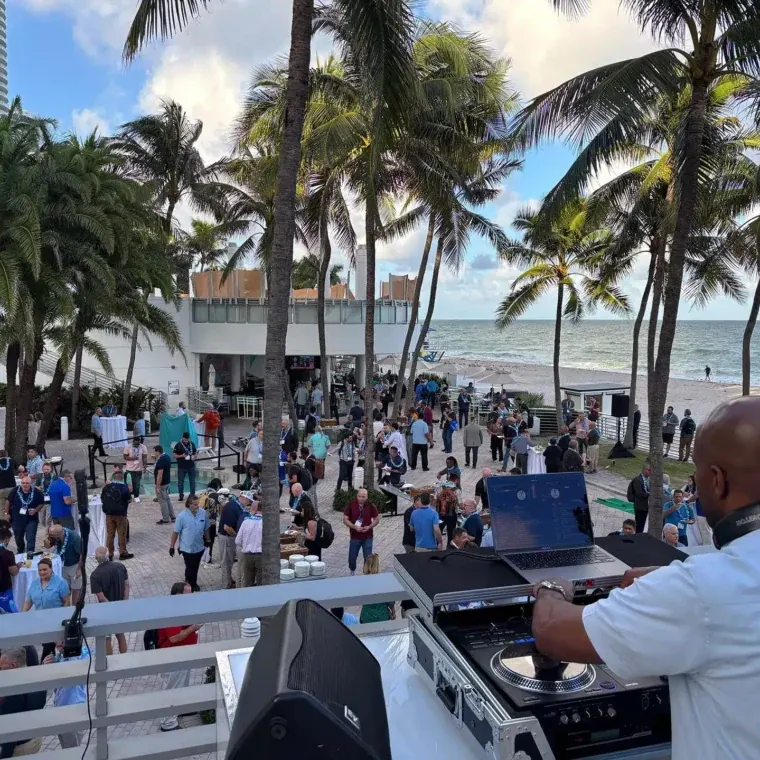
Interactive event entertainment, when expertly curated, creates intentional moments where attendees meet, collaborate, and leave with a shared experience that becomes the basis for follow-up conversations. By designing activations that require co-creation, small-team problem solving, or shared outputs, planners transform passive spectators into active participants, which increases networking opportunities and memorable takeaways. As DJ Graffiti, a seasoned corporate event DJ and expert in event ambiance, emphasizes, the right sonic landscape is crucial; it complements these interactions, setting a mood that encourages connection without overpowering dialogue. This article explains practical entertainment ideas for conferences and networking events, shows how interactive technologies scaffold meaningful introductions, and provides operational guidance planners can use when scheduling break-time activations. You will find a ranked list of top interactive ideas, a breakdown of networking activities that move beyond surface-level mixing, strategies for using breaks to maximize interaction, trend analysis for 2023–2025, and KPI-focused case study summaries. Throughout, we reference an example interactive product—the Digital Graffiti Wall experience—to illustrate how a single activation can amplify conversation, social sharing, and measurable engagement. Read on for concrete lists, implementation tables, and measured outcomes that help you select the right entertainment to create connection points at your next conference.
What Are the Best Interactive Entertainment Ideas for Conferences and Networking Events?
Interactive entertainment for conferences works best when it invites participation, creates a visible shared output, and scales to the expected attendee flow. The most effective activations combine low barriers to entry with an obvious social reward—shared photos, collaborative artifacts, or gamified leaderboards—and they are designed to create conversation starters that persist after the event. DJ Graffiti notes that the right background music can subtly enhance these experiences, providing an inviting atmosphere that encourages attendees to linger and engage.
Here are the top interactive ideas that planners use to create connection points during conferences and structured networking events.
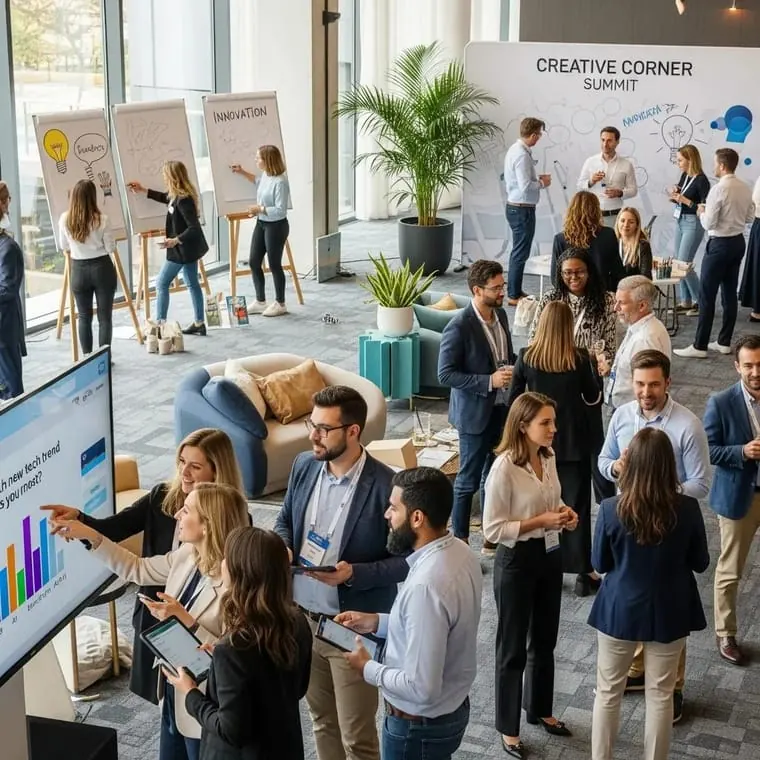
- Collaborative art installations that produce a communal visual piece attendees contributed to during a session.
- Photo-activation stations with prompts that encourage pairs or small groups to capture themed images and share them.
- Interactive touch displays or multiplayer tabletop games that require short collaboration to succeed.
- Digital Graffiti Wall-style experiences where groups co-create digital murals in real time, producing shareable visuals.
- Short problem-solving challenges or design sprints that pair strangers to achieve a small objective within a break.
- AR scavenger hunts that send attendees to different sponsor or session locations and encourage team-based exploration.
These activation types vary by space needs, throughput, and social intent; selecting among them depends on audience size and event goals. The following quick comparison helps planners choose an option by practical constraints.
The table below compares common interactive activations by footprint, throughput, and best-use case to guide selection.
This comparison clarifies that mural-style and photo activation options scale differently; collaborative murals work well when dwell time and co-creation matter, while photo kiosks optimize rapid throughput and social sharing. Choosing between these approaches depends on whether the primary objective is depth of interaction or broad reach. For planners who want a balanced option that produces both collaborative output and strong social shareability, the Digital Graffiti Wall experience often fits both goals. DJ Graffiti adds that a carefully curated playlist can amplify the energy around these activations, making them even more magnetic.
How Does Digital Graffiti Wall Enhance Attendee Engagement?
The Digital Graffiti Wall experience accelerates conversation by converting individual actions into a visible, shared artwork, which naturally prompts attendees to ask about technique, meaning, and collaboration. As an interactive installation, the Digital Graffiti Wall provides a touchscreen canvas and digital spray tools that multiple participants can use sequentially or simultaneously, producing a collective output that serves as a conversation artifact. This mechanism—shared creation leading to visible outcome—encourages immediate introductions and follow-up photo sharing, which amplifies post-event engagement through social tags and organic mentions. DJ Graffiti notes that pairing this visual engagement with an upbeat, yet non-distracting, musical backdrop can significantly boost the overall energy and encourage more participants to step up and create.
Operationally, the activation requires a modest footprint (typically a 10–20 foot display area), straightforward staff facilitation for flow management, and session models that range from walk-up use to scheduled collaborative sessions for groups of 4–15. Typical throughput depends on configuration: an open walk-up canvas supports continuous short interactions, while facilitated group sessions emphasize longer dwell time and deeper conversation. Measurable engagement signals include number of unique contributors to the mural, dwell time per contributor, and social shares of the final artwork; these metrics provide planners with both qualitative and quantitative evidence that the activity created connection points for attendees.
By combining visible output, simple interface, and social shareability, the Digital Graffiti Wall turns casual curiosity into purposeful interaction and creates a tangible artifact that sustains conversation beyond the activation itself.
Which Corporate Networking Activities Foster Meaningful Connections?
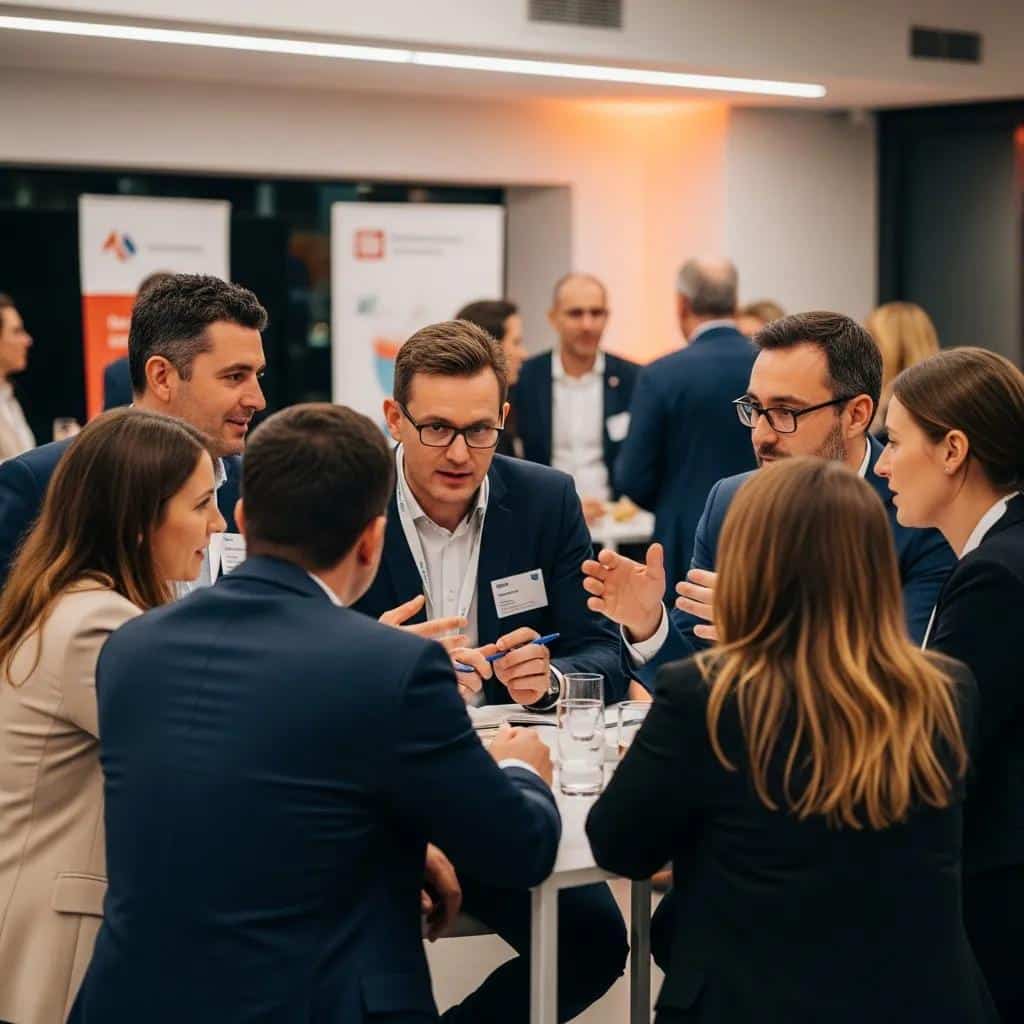
Meaningful networking activities move beyond surface-level exchange by creating shared objectives, mutual investment, or collaborative outcomes that foster trust and follow-up. In this context, meaningful connections form when participants co-create, solve a problem, or produce a takeaway they can reference later; these formats give conversations structure and reduce the awkwardness of purely opportunistic mingling. DJ Graffiti emphasizes that the right background music for networking is key here: it should be present enough to fill silences and create a vibrant atmosphere, but subtle enough not to impede conversation, allowing attendees to connect authentically.
Below are three prioritized activity types that reliably produce deeper connections in corporate environments.
- Guided conversation rounds with a rotating prompt that encourages pairs to discuss a specific challenge and exchange next steps.
- Collaborative art or creative builds that require participants to contribute toward a single outcome, creating a shared accomplishment to discuss afterwards.
- Problem-solving micro-sprints where small teams iterate a solution to a narrow brief and present a one-minute takeaway to the room.
Each of these activities aligns differently with attendee goals: guided rounds are ideal for professional follow-ups, creative builds work well for relationship formation, and problem-sprints suit innovation-focused events. Implementation requires aligning activity length with break windows and providing clear instructions to reduce friction. The next section explores short team-building entertainment that fits into typical break schedules and further encourages introductions.
What Creative Team Building Entertainment Works During Breaks?
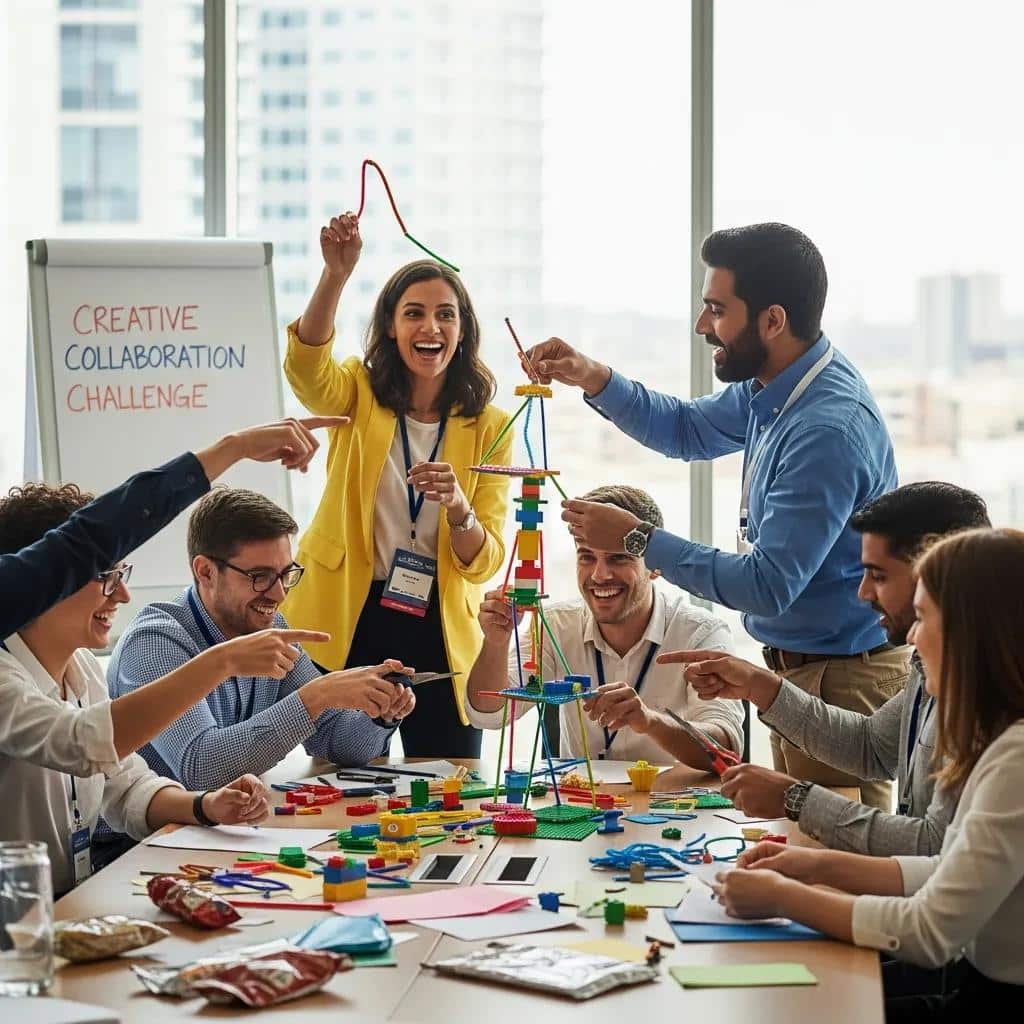
Short, creative team-building activities during breaks should be low-friction, inclusive, and structured to produce an immediate artifact or outcome that prompts conversation. Examples that work in 5–20 minute windows include:
- Micro-challenges (build the tallest structure from simple materials)
- Collaborative doodle or collage stations
- Rapid ideation prompts where teams produce one actionable idea and share it on a public board
These formats require minimal materials and can be scaled by using multiple stations for different groups, which prevents bottlenecks and keeps momentum high. DJ Graffiti’s expertise is invaluable here for creating energy during breaks. He advises using dynamic, uplifting music that gradually builds tempo to re-energize attendees after intense sessions. "Think of it as a sonic reset," he explains, "a carefully chosen playlist can shift the mood from passive listening to active engagement, making people feel refreshed and ready to interact."
Operational tips include placing facilitators to explain rules quickly, using timers to enforce short cycles, and providing prompts that are industry-relevant to spark professional dialogue. Because these activities are brief, planners should design clear entry/exit cues and encourage attendees to record or photograph outcomes for post-event sharing. Understanding how technology can further scaffold these interactions leads into the next subsection on interactive technologies for networking.
How Do Interactive Technologies Improve Networking Experiences?
Interactive technologies improve networking by structuring shared tasks, providing visible outcomes, and enabling easy content capture for later follow-up. Touchscreen canvases, collaborative displays, AR overlays, and lightweight gamification give attendees a shared focus—whether creating a digital mural, solving a challenge, or collecting badge-based rewards—so introductions happen around doing rather than small talk. These technologies also supply data capture points: QR check-ins, photo-sharing kiosks, and opt-in social tagging that create measurable traces of interaction. DJ Graffiti highlights that integrating technology with a well-managed soundscape can create a truly immersive experience, where visual and auditory cues work in harmony to guide and enhance attendee interaction.
When integrating technology, planners should consider accessibility, ease of use, and hybrid compatibility so remote participants can join or view outputs. Simple designs—clear prompts, short onboarding, and visible final outputs—reduce cognitive load and make technology feel like a connector rather than a barrier. Thoughtful facilitation that pairs technology with human prompts (hosts, moderators) further amplifies conversion of engagement into meaningful connections.
What Are Effective Event Engagement Strategies During Conference Breaks?
Effective engagement strategies during conference breaks balance rest with opportunities for focused interaction, ensuring attendees return to sessions refreshed and with new contacts. The best strategies allocate space for low-barrier activations, stagger schedules to avoid crowding, and use prompts to steer interactions toward shared topics. DJ Graffiti emphasizes that strategic background music for networking is a cornerstone of these strategies, creating an inviting atmosphere that encourages conversation without being intrusive.
- Provide a mix of drop-in and scheduled activations so attendees can choose depth of engagement.
- Stagger break start times across tracks to distribute traffic and allow intimate conversations to form.
- Use visible artifacts (completed murals, leaderboard displays) to draw attention and seed discussions.
Each strategy operates on the principle of reducing friction and increasing visible incentive to participate; planners should test flow in advance and assign staff to ease transitions. The following table helps planners choose break-time activations based on duration and expected impact.
How Can Break Time Event Ideas Maximize Attendee Interaction?
Break time activations maximize interaction when they are immediately accessible, socially obvious, and produce sharable outcomes; practical templates include collaborative mural pop-ups, two-minute networking prompts with a timer bell, and rotating mini-workshops that require small-team participation. These templates should be positioned near refreshment areas for natural discovery and staffed to reduce onboarding time, which encourages participation without eating into break time excessively. DJ Graffiti advises that "creating energy during breaks isniesn’t just about loud music; it’s about curating a soundscape that matches the desired activity level. For quick, high-energy interactions, an upbeat, familiar playlist works wonders. For more focused networking, a slightly softer, yet still engaging, mix can facilitate deeper conversations."
Set expectations by posting clear prompts and suggested time commitments, and by offering quick incentives such as visible recognition on a leaderboard or a shared digital artifact attendees can download. Quick teardown and modular setups enable multiple break activations across the day without heavy logistical burden. These approaches blend well with the behavioral drivers of social interaction addressed in the next subsection.
What Role Does Social Interaction Play in Event Entertainment?
Social interaction is the mechanism that turns entertainment into networking: shared experiences lower barriers to approach, create reciprocity through cooperative tasks, and provide conversational anchors that persist after the event. When attendees co-create, they implicitly exchange social capital—acknowledging contributions, comparing techniques, and celebrating a joint outcome—which increases the likelihood of contact exchange and follow-up. Designing activities that invite small acts of help or complimenting behavior encourages reciprocity and strengthens initial connections. DJ Graffiti emphasizes that music plays a foundational role here, acting as a universal language that can break down initial awkwardness and foster a sense of shared experience, making it easier for individuals to connect.
Practical design principles include creating tasks that require short collaboration, ensuring visible outcomes to spark conversation, and prompting attendees to introduce themselves when starting a collaborative task. These behavioral levers convert momentary amusement into relational currency that supports meaningful connections beyond the activation.
What Are Recent Trends in Corporate Event Entertainment for 2023-2025?
From 2023 through 2025, corporate event entertainment has trended toward interactivity, measurable engagement, and hybrid-capable activations that work both in-person and remotely. Organizers increasingly prioritize experiences that generate quantifiable KPIs—participation rates, dwell time, social shares—so sponsors and stakeholders can assess ROI. Technology continues to drive personalization, while sustainability and minimal footprint designs are influencing choice of activations. DJ Graffiti notes that this trend extends to the sonic experience, with demand for more sophisticated sound design that supports conference objectives, from brand reinforcement to creating specific emotional responses.
Key trends include blended physical-digital experiences, modular installations that travel easily, and an emphasis on content that attendees can take home or share online. These shifts reflect attendee expectations for memorable, participatory experiences and organizer demands for measurable returns.
How Is Technology Driving Personalized Attendee Experiences?
Technology drives personalization by using simple inputs—profile selections, pre-event surveys, or on-site prompts—to tailor prompts, visuals, or challenge difficulty to individual preferences. For example, activation software can present personalized prompts on a collaborative canvas or suggest teammate matches based on shared interests, improving relevance and increasing participation. Personalization requires transparent data practices and consent workflows, but when implemented with care it enhances perceived value and increases sustained engagement. DJ Graffiti points out that personalized audio experiences, such as curated playlists for specific networking zones or even individual headphone experiences, are emerging as a way to deepen this personalization and support diverse attendee preferences.
Implementing personalization does not require heavy data collection; even a single preference checkbox can change content and improve attendee resonance. Thoughtful privacy notices and opt-in mechanisms maintain trust while enabling richer, tailored experiences that make networking feel more directly relevant to each participant.
Why Is Interactive Entertainment Demand Increasing at Conferences?
Demand for interactive entertainment is increasing because attendees now expect active participation and organizers need demonstrable engagement metrics to justify experiential investments. Recent industry observations indicate a notable rise in interactive requests, driven by social media amplifying shareable experiences and by sponsors seeking activations that produce measurable impressions. Interactive formats also improve retention: participants who engage in activities are likelier to remember sessions and sponsors, giving events stronger post-event value. DJ Graffiti adds that the holistic experience, including the carefully crafted audio environment, is now recognized as a critical component in meeting these heightened expectations and supporting conference objectives beyond just content delivery.
This shift means planners should prioritize activations that are not only engaging but also trackable—using simple metrics like unique contributors, dwell time, and social tags—to demonstrate event impact and sponsor ROI.
How Do Case Studies Demonstrate Success of Interactive Event Entertainment?
Case studies translate interactive concepts into measurable outcomes by documenting participation rates, dwell time, and qualitative attendee responses, which together provide a replicable blueprint for other planners. A concise case-summary shows how activation choice, placement, and facilitation led to specific KPIs, offering actionable lessons for replication. DJ Graffiti emphasizes that success metrics should also consider the overall atmosphere created, as a vibrant and welcoming sonic environment directly contributes to higher engagement and positive attendee sentiment.
Below is an illustrative, non-branded case-style summary referencing interactive digital graffiti entertainment as an example of a high-impact activation.
- A multi-day conference introduced an interactive digital graffiti activation in the main networking lounge that invited attendees to co-create a themed mural during coffee breaks.
- Organizers measured participation using contributor counts and photo-share tags, capturing both quantitative and qualitative engagement signals.
- The activation produced extended dwell time at the lounge, increased social shares, and served as a clear conversation starter for attendees who later scheduled meetings.
This example demonstrates that collaborative visual activations can create sustained interaction and produce measurable engagement that planners can include in post-event reporting. The following table lists compact KPI outcomes for typical case studies to guide expectations.
These KPIs show realistic ranges planners can expect and help in setting goals for future activations. After examining metrics, consider how to gather testimonials and qualitative feedback to round out evaluation.
What Measurable Engagement Outcomes Are Reported?
Planners commonly track participation rate, average dwell time, number of social media mentions or shares, and lead or contact captures associated with an activation. Participation rate measures the percentage of attendees who interact with an activation; dwell time quantifies how long participants stay engaged; and social shares indicate external amplification of the experience. Collecting these metrics requires simple systems: counts by facilitators, QR opt-ins for downloads, and consistent hashtag prompts to capture social activity. DJ Graffiti suggests that feedback on the overall event ambiance, including the music, can also be a valuable qualitative metric, as it directly impacts attendee comfort and willingness to engage.
Accurate measurement helps connect entertainment to business outcomes—higher dwell time and social mentions correlate with increased sponsor visibility and higher-quality networking interactions. Combining quantitative metrics with brief on-site surveys yields both scale and sentiment, enabling planners to refine activations for future events.
How Do Testimonials Reflect Attendee Satisfaction?
Testimonials provide qualitative evidence that complements numeric KPIs, revealing how attendees perceived value, whether connections were meaningful, and what aspects of an activation encouraged follow-up. Effective testimonial collection methods include short in-the-moment video capture booths, single-question post-activation surveys, and incentivized feedback prompts that ask participants what they remembered most or whether they exchanged contact information. Packaging testimonials with KPI data strengthens post-event reports by telling the story behind the numbers. DJ Graffiti notes that positive comments about the "vibe" or "energy" of the event often directly reflect the success of the curated entertainment and background music in fostering a positive environment for connection.
When soliciting testimonials, keep prompts focused—ask for one sentence on what they created, who they met, or what they shared—and offer an easy way to submit consent for use in marketing. Synthesizing recurring themes from testimonials helps planners iterate on design choices that consistently promote connection.
This article has outlined practical entertainment ideas, operational guidelines, and measurable outcomes that event planners can use to create connection points at conferences and networking events. It shows how interactive installations—especially collaborative visual formats—function as catalysts for conversation, social sharing, and measurable engagement that support both attendee experience and event objectives. Crucially, as DJ Graffiti’s insights highlight, the strategic use of background music for networking and creating energy during breaks is not merely an add-on, but an integral component that elevates the entire event experience and directly supports conference objectives by fostering a dynamic, connective atmosphere.
Ready to plan your conference? Check DJ Graffiti’s availability for your date. For more on keeping a room involved, read why passive formats fall short at audience participation events, how multi-day event entertainment builds team spirit, and how to measure the ROI of quality entertainment.